RO Purifier Ownership Costs in India – What Nobody Tells You
RO purifier ownership costs in India run much higher than almost every buyer expects. That is the inconvenient truth.
So you spent ₹15,000 on an RO. Maybe more.
The technician installed it. The water tasted clean. You felt like you’d finally solved it. Then six months later, someone called to say it needed a service. Fine. You paid. You think its part of the routine servicing schedule.
Then the membrane died. ₹2,500. Twelve months in. You went on Amazon to check if this was normal – and found a hundred reviews saying exactly the same thing. One star. ‘Membrane failed in 10 months’. ‘Complete waste of money’. ‘Never buying this brand again’.
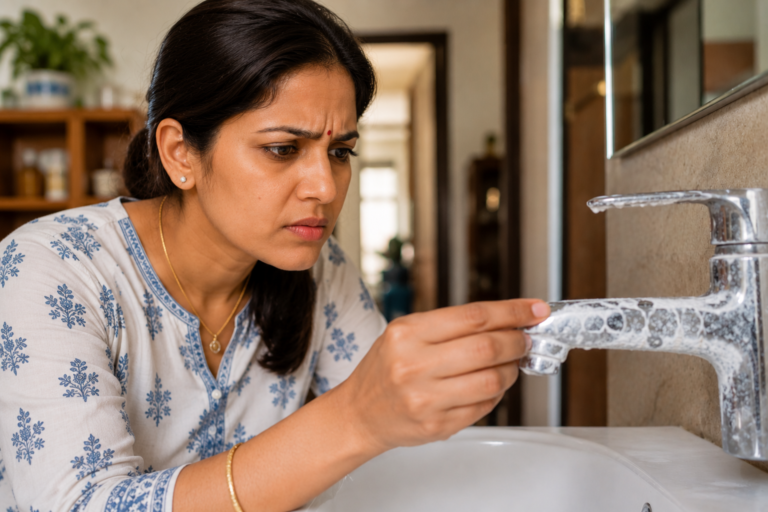
Then one day the RO leaked. Under the cabinet. On a Tuesday morning when you were already late for work. You had to go through the whole calling the RO service guy again. Arghh…! Then another day a few months later, the water started tasting off again – even though the RO was supposedly working. Then another service call. Another wait. Another bill. Another technician who showed up four days late and recommended three parts you weren’t sure you needed. And then one day – quietly, in the middle of all of it – you go: I’m done with this one. I need a new one.
That exact moment is why this article exists. Not to sell you another RO. To make sure that when you do buy again – you buy with everything the industry hoped you’d never know but you should know.
What you will know by the end of this article:
|
Why the arc happens…and why it is not your fault
Most RO buyers make the same assumption: they are buying a solution. A one-time fix for bad water. Pay once, drink clean forever.
That is not what an RO water purifier is. An RO is a maintained appliance – closer to a car than a filter jug. It has consumable components, a service lifecycle, and performance that degrades predictably if it is not maintained. A car owner knows this before they buy. An RO buyer almost never does.
Why? Because no brand tells you. Their marketing sells the purchase moment – the clean water, the peace of mind, ‘sabse shudh pani’ claims, the 7-stage purification. The maintenance reality lives in the fine print, if it appears at all.
| The mismatch that drives the arc:
What you bought: a one-time solution. What you actually got: a 3–5 year relationship with a machine that needs scheduled attention, costs more than advertised, and will eventually need replacing. This is not a product defect. It is an information gap – and it is not your fault. |
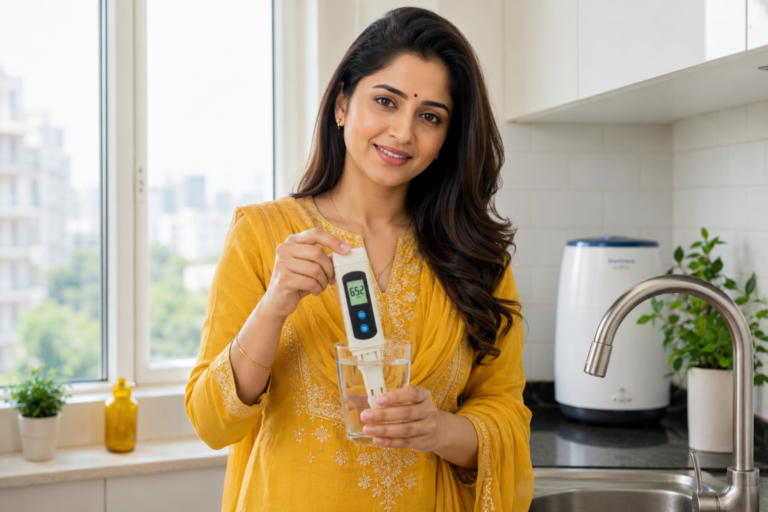
Understanding this changes everything about how you buy next time. You stop comparing purchase prices and start comparing total cost of ownership. You stop asking ‘which RO is best’ and start asking ‘which RO is best for my water, my city, and my service reality.’ Those are completely different questions – and they get completely different answers.
What actually fails, when – and how to prevent it
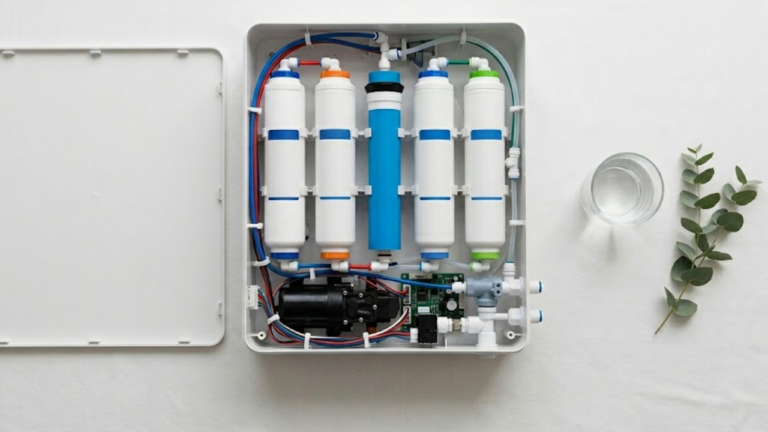
An RO is not one machine. It is a sequence of components, each with its own lifespan, each protecting the next. When one is neglected, it accelerates failure in what follows. Here is the prevention guide:
| Component | Normal Life | High TDS Life | Prevention | Cost if Neglected |
|---|---|---|---|---|
| Sediment pre-filter | 3–6 months | 2–3 months | Replace on schedule. Set a phone reminder. | Membrane clogs, fails in months |
| Carbon pre-filter | 3–6 months | 2–3 months | Replace with sediment filter — same schedule. | Chlorine degrades membrane |
| RO membrane | 12–24 months | 6–10 months | Protect it: change pre-filters on time. | ₹1500–3000 replacement |
| Post-carbon filter | 12 months | 12 months | Annual replacement — don't skip. | Water tastes off |
| UV lamp | 12 months | 12 months | Annual — insist it's checked every service. | Biological safety compromised |
| Storage tank bladder | 3–5 years | 2–3 years | Flush tank quarterly. | Stored water quality degrades |
| The pre-filter insight that most RO owners learn too late:
Pre-filters cost ₹400 for a set. Skipping them leads to membrane failure that costs ₹2,500. The membrane is the most expensive component. The pre-filters are what protect it. Replacing them on schedule is the single highest-return maintenance action you can take. |
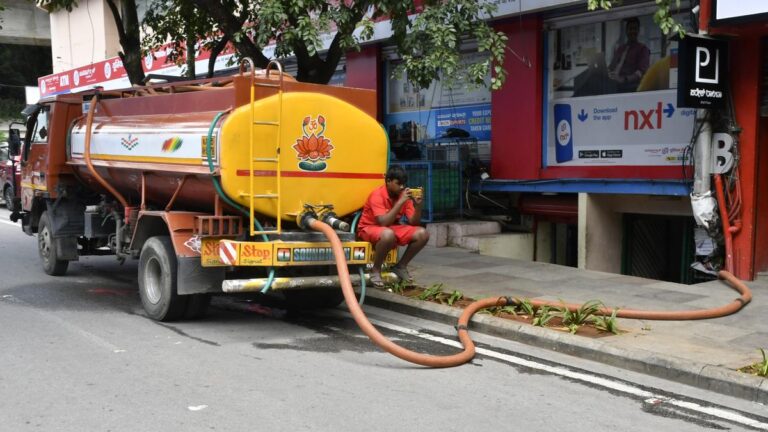
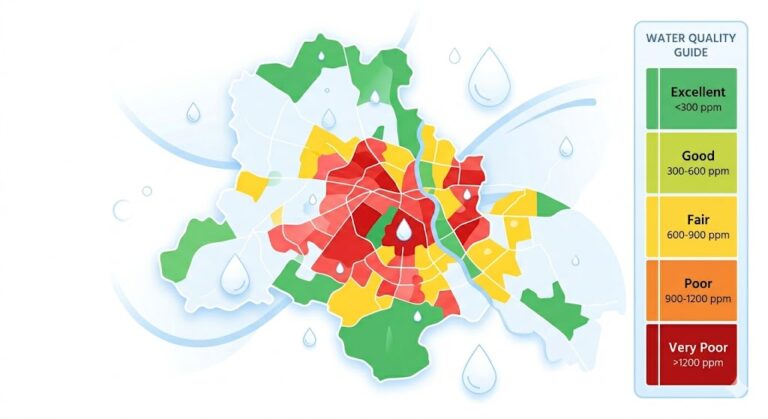
A note on cities where TDS runs high: in Delhi NCR, where borewell TDS ranges from 800 to 1,400 ppm across most localities, every component timeline above compresses. A membrane that lasts 18 months in Bengaluru on municipal supply may last 8 months in Noida on borewell water. The prevention logic is the same everywhere – the urgency is higher in high TDS cities. For how TDS affects your membrane life specifically for example like in a city like Delhi, see our Delhi NCR water guide below. We will add more city-specific water guides soon.
Your Water TDS Is High. Here’s What That Number Actually Means – And Which RO Fixes It in Delhi NCR
How to read a service contract – and the one question that reveals everything
The Annual Maintenance Contract (AMC) is where most RO buyers lose money without knowing it. Here is what to check before signing:
- Parts vs labor: most budget AMCs cover labor only. Membrane replacement, filter sets, UV lamps – all extra. Ask specifically: ‘Does this AMC include membrane replacement?’
- Number of service visits: once a year is not maintenance. Twice yearly is the minimum for high TDS water. Once quarterly if you are on borewell water.
- What is not covered: always ask for the exclusion list in writing. Surprises in year 2 are always in the exclusion list.
- Some AMCs claim absolutely no fee for the first two years but they also come with caveats which clearly say no replacements or refunds whatsoever – even if it damaged the day after you bought it brand new.
- Third-party technicians: many brands outsource service in cities outside their core markets. A third-party technician with no brand training is not the same as brand service, regardless of what the AMC says.
The one thing that actually tells you about service: call the number on the brand’s website – not Amazon, not Flipkart, the brand’s own site. Call it before you buy. See if someone answers. Ask how long a service visit takes in your area.
The answer – or the silence tells you everything. A brand that picks up and gives you a specific answer has a service operation. A brand that puts you on hold for eight minutes and transfers you twice does not. This is not a guarantee. But it is the closest thing to real information you will get before committing ₹15,000.
| 🔍 ROI Engine
Not sure which brands have strong service coverage in your city? The ROI Engine factors in service network by city – not just specs. 4 questions. Your matched recommendation. |
What RO purifier ownership costs in India actually look like – the honest numbers
Here is the number brands hope you calculate after you buy, not before:
| Cost Item | Annual Cost | What Brands Don't Highlight |
|---|---|---|
| Annual Maintenance Contract (AMC) | ₹1500–3500 | Check what's covered — often labour only, not parts. |
| Membrane replacement | ₹1500–3000 | Every 12–24 months normal load. 6–10 months high TDS. |
| Pre-filter set (sediment + carbon) | ₹400–800 | Every 3–6 months. Most neglected. Most impactful. |
| UV lamp | ₹500–1200 | Annual. Routinely skipped during service visits. |
| Out-of-warranty service call | ₹500–1500/visit | Starts year 2–3 for most units. |
| Total realistic annual cost | ₹3000–6000/year | Every year. On top of purchase price. |
| Total 4-year cost of a ₹12000 RO | ₹24000–36000 | The purchase price is just the entry fee. |
Read that table as a buying tool, not a scare tactic. It changes how you compare options:
- A ₹12,000 RO with poor service coverage and no AMC may cost you ₹36,000 over 4 years.
- A ₹18,000 RO from a brand with strong city presence and a comprehensive AMC covering parts and labour may cost you ₹28,000 over the same period.
- The cheaper unit costs more. This is not an exception – it is the pattern.
Some newer D2C brands market fully free 2-year AMCs as a purchase incentive. Read the fine print before it feels like a win. These AMCs typically come with blanket no-refund, no-replacement clauses – meaning if the unit arrives damaged, malfunctions from day one, or has a manufacturing defect, you have no recourse. The ‘free’ AMC is not consumer protection. In some cases it is the opposite – you have signed away your right to demand a replacement in exchange for free service visits.
The smarter way to think is this…any AMC that removes your right to a refund or replacement is not a benefit. It is a liability transfer – from the brand to you.
Also, while we are at it.. according to WHO guidelines, safe drinking water is a basic right – but maintaining the equipment that delivers it is your responsibility. Here is the link to the WHO guidelines.
| Total cost of ownership, not purchase price, is the only number that matters. Every other comparison is incomplete. |
Repair or replace – the honest framework
This is the question every fed-up RO owner is actually asking. Here is the decision framework, without hedging:
| Your Situation | Repair | Replace |
|---|---|---|
| Unit under 2 years, first membrane failure | Yes — repair and start a proper pre-filter maintenance schedule. | — |
| Unit over 3 years, repair cost above 40% of new unit price | — | Replace — you are past the point of good return. |
| Recurring failures within 12 months of last repair | — | Replace — the unit is not matched to your water. |
| Output TDS consistently above 250 ppm despite new membrane | — | Replace — wrong spec for your water. Time for the ROI Engine. |
| Brand has no service presence in your city | — | Replace — this will only get worse. Buy from a brand with local coverage. |
The framework is simple: if you are past year 3, if repair costs exceed 40% of a new unit, or if your current RO is delivering consistently poor results despite maintenance – you are not repairing a problem. You are funding a mismatch between your water and your RO’s specification.
Replacing is not a failure. It is the right call – if you buy right this time. Which brings you to the last section.
The 5 things to check before buying your next RO
The spec sheet tells you filtration stages and tank capacity. It does not tell you what actually determines whether this RO will serve you well for 4 years or land you back here in 18 months. Here is the checklist:
- Membrane rated input TDS – must match or exceed your actual water TDS. In Mumbai where municipal TDS runs 200–400 ppm, a standard membrane is sufficient. In Delhi NCR borewell areas running 800–1,400 ppm, look for membranes rated to 1,500–2,000 ppm input. This is the most common mismatch – and the most preventable.
- Number of filtration stages – 6 or more for high TDS borewell water. Fewer stages mean more load on the membrane, shorter lifespan.
- Mineralizer – essential if your input TDS is above 800 ppm. Without it, output TDS will be too low – stripping beneficial minerals. Look for it in the spec.
- Service network in your city – verify before you buy. Call the service number. Ask for the nearest center. This check takes 3 minutes and protects your next 4 years.
- AMC terms – understand exactly what is covered and what is not before you buy. Ask specifically: does this cover membrane replacement or labor only? Are there any clauses that remove your right to a refund or replacement? A free AMC that strips your consumer rights is not a benefit.
These five checks cost nothing. They prevent everything in this article from happening again.
If you want to understand how a mineralizer works, do check out article that explains it very clearly.
| ROguru does not recommend specific RO models in this article. The right RO depends on your city, your water source, your TDS, your budget, and your service reality. Those variables are different for every reader. The ROI Engine takes all of them into account. |
| 🔍 ROI Engine
You now have the framework every brand hoped you would figure out only after buying. Let the ROI Engine apply it to your specific water, city, and budget – in 4 questions. |
The bottom line
The replacement-frustration arc is a very predictable one. Now, with this information at hand, you can break it.
Understanding RO purifier ownership costs in India is the difference between a frustrating cycle and a smart decision.
You were not foolish for not knowing this before your first purchase. You were not told. And you did not know where to look. The system had every incentive to keep the maintenance reality in the fine print and the purchase moment in the spotlight.
You now know why the arc happens, what it actually costs, when to repair and when to replace, and exactly what to check before buying again. That is everything – and it changes every decision from here.