Your Water TDS Is High. Here’s What That Number Actually Means – And Which RO Fixes It in Delhi NCR
Drinking water TDS – Delhi NCR – normally runs high and most homeowners have no idea what their number actually means.
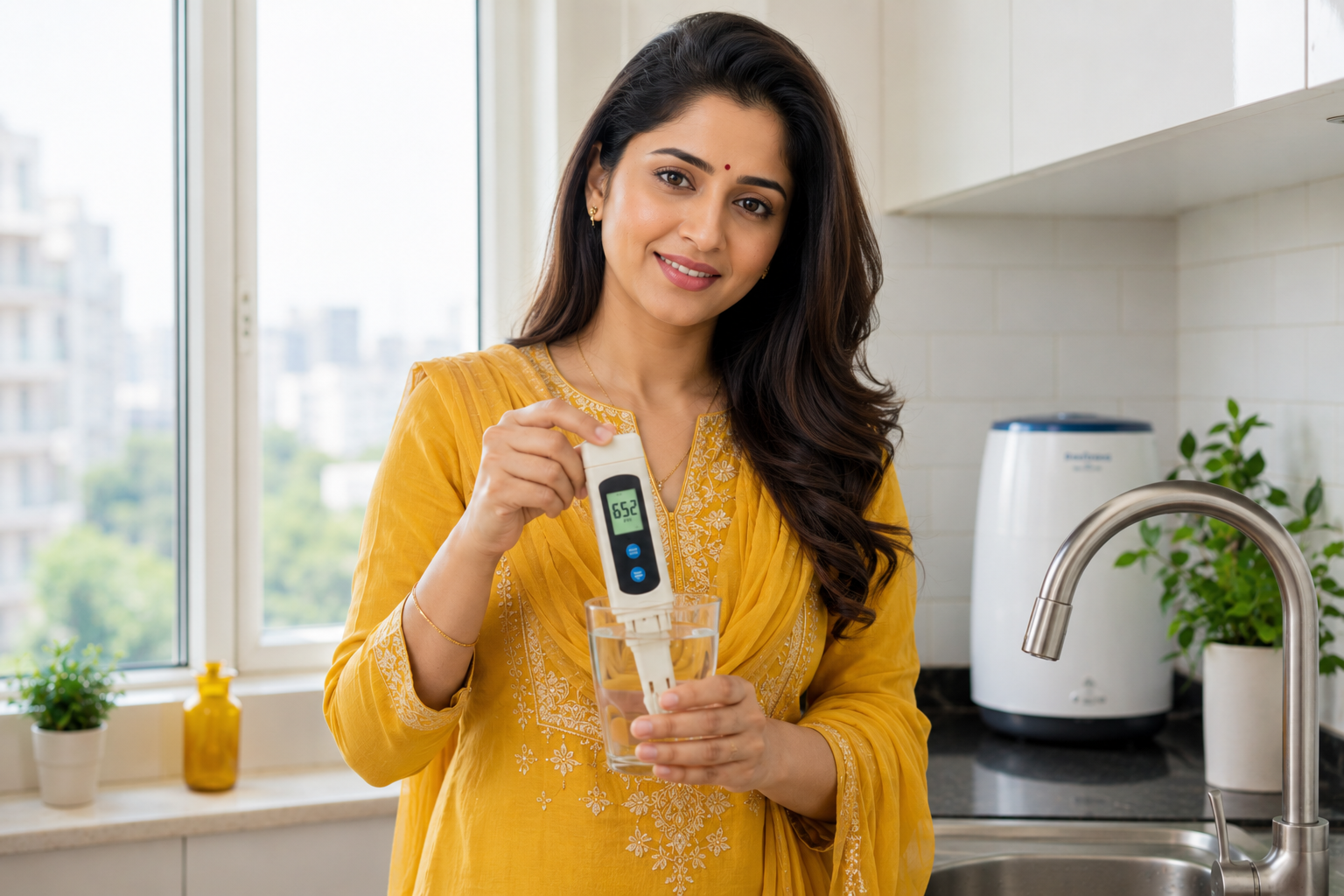
You tested your water. The meter says 840. You’ve looked at three ROs on Amazon. One says it handles ‘up to 2,000 ppm TDS’. Another says the ideal output is 50 ppm. A third says 150–300 ppm is the target. None of them actually explain what that TDS number 840 actually means for you and your health. None of them tell you whether your number is good/bad/dangerous, borderline, or completely normal for where you live.
Every brand has a preferred number. Their number. The one that makes their product look necessary.
This article has no ‘preferred’ number. It takes your TDS reading and tells you – clearly, without hedging – what it means, what it should be after treatment, and which RO gets you there. That’s it.
What TDS actually is – in plain English
TDS stands for Total Dissolved Solids. It is a measure of everything dissolved in your water – minerals, salts, and chemicals that pass through a standard filter. The number on your meter represents the combined concentration of all these substances in parts per million (ppm).
In Delhi NCR, the dominant contributors to TDS are calcium, magnesium, fluoride, nitrates, and – in localities near industrial areas – traces of heavy metals. The geology of the region, combined with deep borewell extraction and ageing municipal infrastructure, means NCR consistently runs among the highest TDS readings of any major Indian city.
One thing worth understanding from the start: high TDS does not automatically mean dangerous. A 500 ppm reading of mineral-rich mountain water is very different from a 500 ppm reading of borewell water in an industrial belt. TDS measures quantity, not composition. But it is the right starting point for every decision – because it tells you the scale of what your water contains, and which treatment will address it.
What your TDS number actually means – the honest bands for Delhi NCR
Here is the framework. Four bands. No brand agenda.
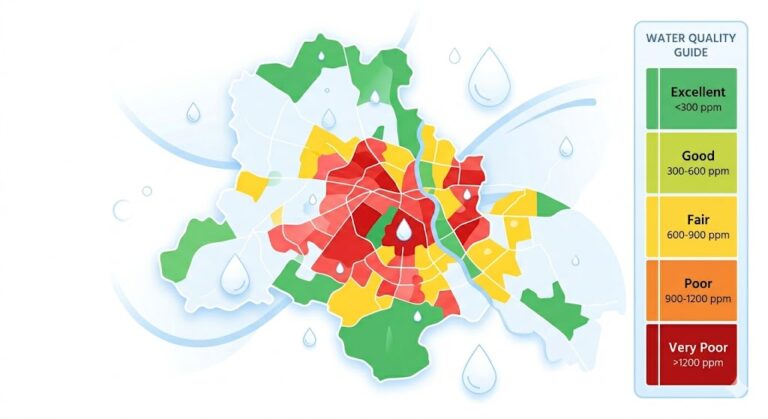
| TDS Reading | What It Means | Do You Need an RO? | Urgency |
|---|---|---|---|
| Below 300 ppm | Generally safe. Municipal supply in Central Delhi often falls here. | Not essential. Monitor periodically. | Low |
| 300–600 ppm | BIS allows up to 500 ppm. WHO prefers below 300 ppm. Borewell at this level needs treatment — composition unknown. | Yes, recommended. | Moderate |
| 600–1200 ppm | Treatment required. Most common NCR borewell band. Standard RO handles this well. | Yes, required. | High |
| Above 1200 ppm | Janakpuri, Faridabad, Ghaziabad borewell territory. Standard RO membranes underperform. Specific models required. | Yes, high-rejection RO required. | Immediate |
|
A note on borewell vs municipal at the same TDS: a 400 ppm reading from Delhi Jal Board municipal supply is generally better understood – it has been treated, tested, and published. A 400 ppm reading from your building’s borewell is an unknown. The composition could include fluoride, nitrates, or industrial contaminants that don’t show up in a TDS reading alone. If your source is borewell, treat it regardless of the number. |
White Deposits. A Geyser That’s Lost Its Heat. This Is What Delhi NCR’s Hard Water Is Doing To Your Home.
What your RO should bring your TDS down to – and why the ’50 ppm is best’ myth is wrong
This is where most buyers get misled.
Some brands – particularly those selling ROs with mineralizers – argue that output TDS should be as low as possible, ideally 50 ppm or below. This sounds safe. But you now, It isn’t actually that optimal.
Water at 50 ppm has had nearly everything removed from it – including calcium and magnesium, which are minerals your body uses. It tastes flat. Some research suggests very low TDS water may be marginally less effective at hydration than mineral-balanced water. The WHO’s own guidelines note that extremely low TDS water is not the target for drinking water quality.
The honest target post-RO is 100–200 ppm. At this level, your water is clean, safe, and mineral-balanced. The harmful contaminants – excess salts, fluoride, nitrates, heavy metals – have been removed. The beneficial minerals remain in useful concentrations.
|
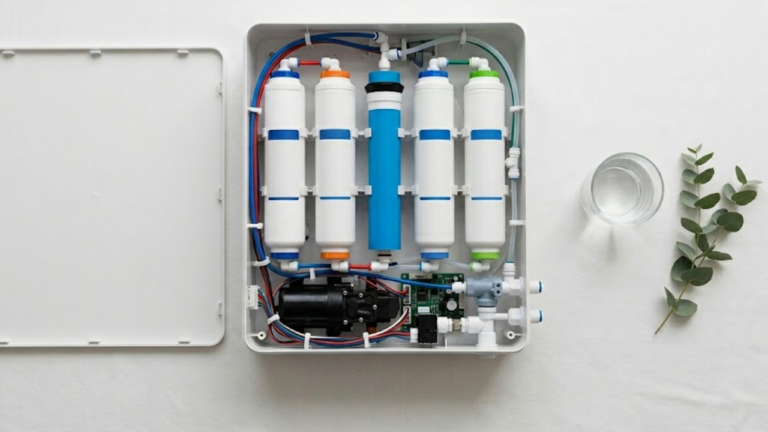
What is a mineralizer? Some ROs include a mineralizer cartridge – a post-membrane stage that adds calcium and magnesium back into the treated water. If your input TDS is very high (above 800 ppm), a good RO will bring output TDS well below 150 ppm, and a mineralizer restores it to the 150–250 ppm range. For input TDS in the 300–600 ppm band, a mineralizer is less critical – the RO will naturally land in a healthy output range. What Is MTDS in Your RO Purifier? And Why Your Technician Might Not Tell You the Full Story! |
|
🔍 ROI Engine Not sure what your specific water needs? The ROI Engine factors in your TDS, your water source, and your locality – and gives you a matched recommendation in 4 questions. |
Drinking water TDS – Delhi NCR what your locality’s water actually looks like
Your TDS reading makes more sense when you know what’s normal for where you live.
Your Locality’s TDS Changes Everything – How to Pick the Right RO for Delhi NCR Borewell Water
The table below is drawn from the Ion Exchange / IJEAST 2024 dataset – one of the most comprehensive published studies of NCR groundwater quality.
| Locality | Source | Typical TDS | Band |
|---|---|---|---|
| Central Delhi | Municipal | 200–400 ppm | Safe to moderate — monitor regularly |
| Gurugram | Municipal | 300–600 ppm | Moderate — RO recommended |
| Noida / Greater Noida | Borewell | 800–1400 ppm | High — standard RO required |
| Faridabad | Borewell | 900–1600 ppm | High — standard to high-rejection RO |
| Ghaziabad | Borewell | 900–1600 ppm | High — standard to high-rejection RO |
| Janakpuri / West Delhi | Borewell | 1000–2000 ppm | Extreme — high-rejection RO required |
If your reading is significantly higher than your locality’s typical range, get a full water test from a NABL-certified lab before buying. A TDS meter gives you a number – it doesn’t tell you what’s causing it. In most NCR localities, the cause is well understood. But if you’re near an industrial area or your number seems unusually high, composition matters.
Which RO for which TDS band – the Delhi NCR buying guide
For drinking water TDS- Delhi NCR…the same product recommendations apply across Q004 and Q005 – which are linked here. If you’ve come through those articles in our website, you’ll recognize these. Consistency is intentional – ROguru doesn’t change its recommendations based on the article you’re reading.
|
Hardness Level |
Localities |
Right Solution |
Recommended RO |
|
Moderate (150–300 mg/L) |
Gurugram Sector 14–22, Noida Sector 62, South Delhi |
Standard RO with mineraliser |
Aquaguard Ritz Pro, Livpure Allura Premia |
|
Hard (300–500 mg/L) |
Rohini, Dwarka, Indirapuram, Faridabad |
Higher-capacity RO – check membrane rating |
Urban Company Native M1, |
|
Very Hard / Extreme (500+ mg/L) |
Burari, Janakpuri, Najafgarh, Ballabhgarh |
High-rejection RO – consider softener combination |
Pureit Eco Water Saver |
|
All six models above have service networks across Delhi NCR. Service availability – not just product specs – is a real factor in NCR. RO membranes need annual replacement. A brand with no service presence in your area means a dead purifier in 14 months. Every model listed here has verified NCR service coverage. |
300–600 ppm: Aquaguard Ritz Pro | Amazon Link
Strong fit for moderate-TDS Delhi NCR homes. In the ROguru database, Aquaguard Ritz Pro is listed for input TDS up to 1000 ppm, making it suitable for the 300–600 ppm range with room to spare. Its remineralization setup helps restore minerals after RO purification, and the Aquaguard service network is a practical advantage across many NCR areas.
300–600 ppm: Livpure Allura Premia | Amazon Link
A strong lower-to-mid TDS option for homes around the 300–500 ppm range. Livpure Allura Premia is listed for Delhi in the ROguru database, supports UV+UF along with RO, and includes remineralization plus anti-scalant treatment. It is a good choice for smaller households or buyers who want a balanced value option without overbuying for very high TDS.
600–1,200 ppm: Urban Company Native M1 | Amazon Link
A strong fit for Delhi NCR homes in the 600–1,200 ppm range. In the ROguru database, Native M1 is listed for Delhi and rated up to 2000 ppm input TDS. Its strongest advantage is the combination of 100% RO purification, post-remineralization, 8L storage, and the “no service for 2 years” proposition, which can reduce early ownership anxiety.
600–1,200 ppm: Pureit Eco Elite 2X | Amazon Link
A strong option for higher-mid TDS homes, especially where storage capacity and water saving matter. Pureit Eco Elite 2X is listed for Delhi and rated up to 2000 ppm in the ROguru database. It has 10L storage, remineralization, and 100% RO filtration with mineral addition, making it a practical choice for families in the 800–1,200 ppm range.
1,200–2,000 ppm: Pureit Eco Water Saver | Amazon Link
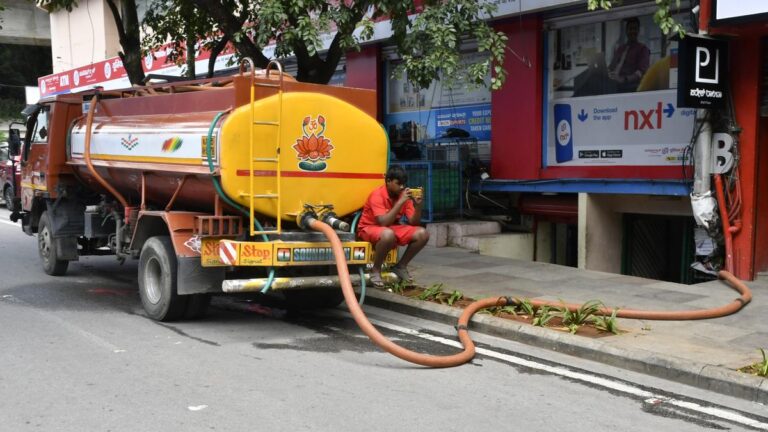
A strong high-TDS choice because the database explicitly notes 100% RO with no bypass and input TDS handling up to 2000 ppm. At 1,200+ ppm, no-bypass RO logic matters because you want the full water stream going through the RO membrane before minerals are added back. Its 10L storage and water-saving positioning also make sense for Delhi NCR homes dealing with hard borewell or tanker water.
1,200–2,000 ppm: AO Smith Z5 Pro | Amazon Link
A strong alternate for high-TDS homes, especially smaller households. AO Smith Z5 Pro is listed for Delhi and rated up to 2000 ppm in the ROguru database. It brings copper/mineral enhancement and strong TDS reduction, but its 5L storage means it is better suited to smaller families or homes with moderate daily drinking-water demand.
🔍 ROI EngineYou now have the framework every dealer hopes you don’t. Use it – or let the ROI Engine apply it to your specific water, source, and budget in 4 questions. |
The bottom line
Your TDS reading isn’t a problem to fear. It’s information.
You now know what your number means – which band it falls in, what’s normal for your locality, and what it should look like after treatment. You know the honest post-RO target (150–250 ppm, not 50 ppm). And you know which RO, matched to your specific TDS band, will get you there.
That’s everything your dealer or online store hoped you wouldn’t figure out before walking in.