White Deposits. A Geyser That’s Lost Its Heat. This Is What Delhi NCR’s Hard Water Is Doing To Your Home.
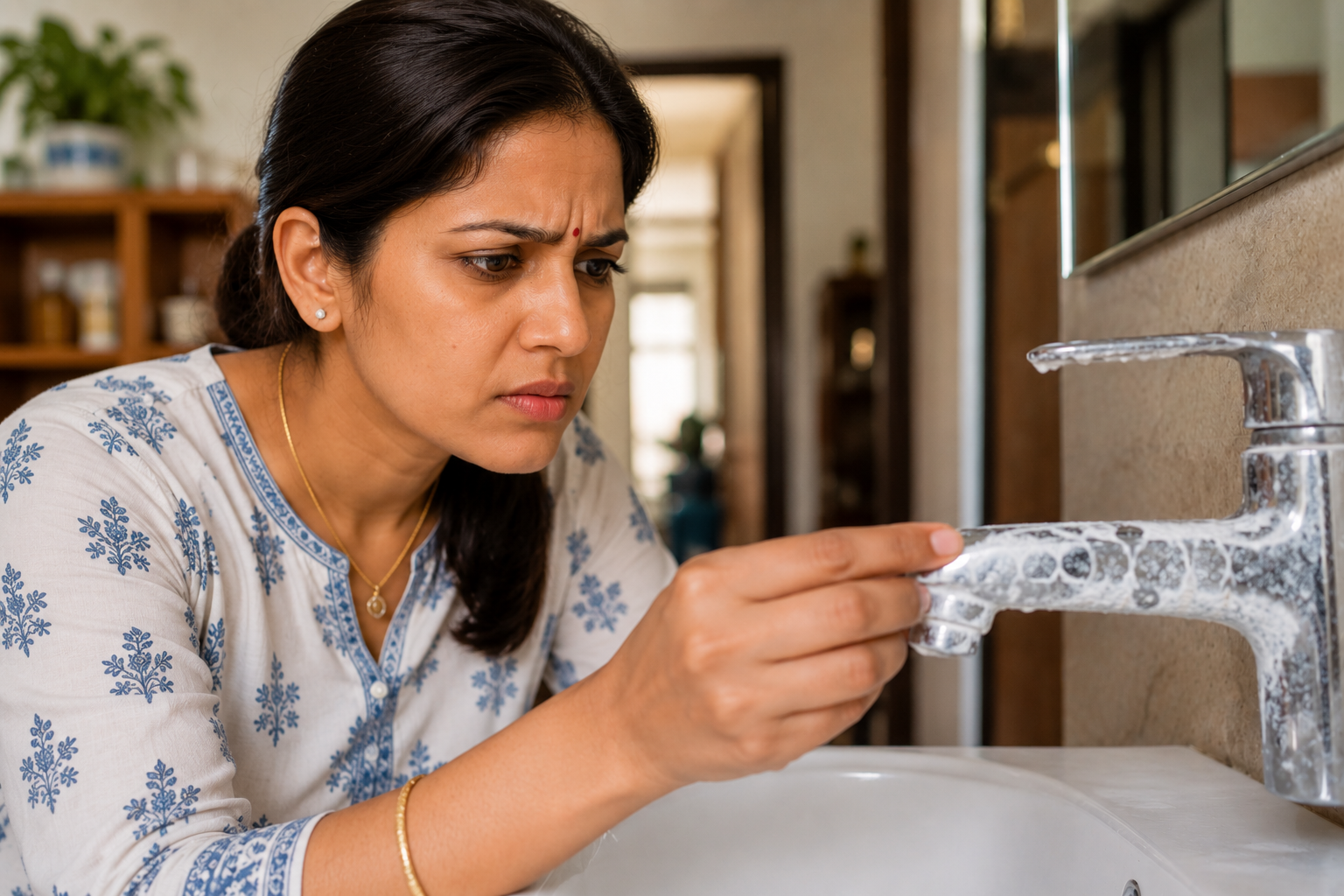
Hard water problems in Delhi NCR are more widespread than most homeowners realise — and more expensive. Most Delhi NCR households have learned to live with it. The white crust on the bathroom tap. The kettle that needs descaling every few months. The geyser that somehow doesn’t feel as hot as it did two years ago.
You’ve blamed the fittings. Blamed the plumber. Blamed the brand.
It’s none of those things. It’s your water.
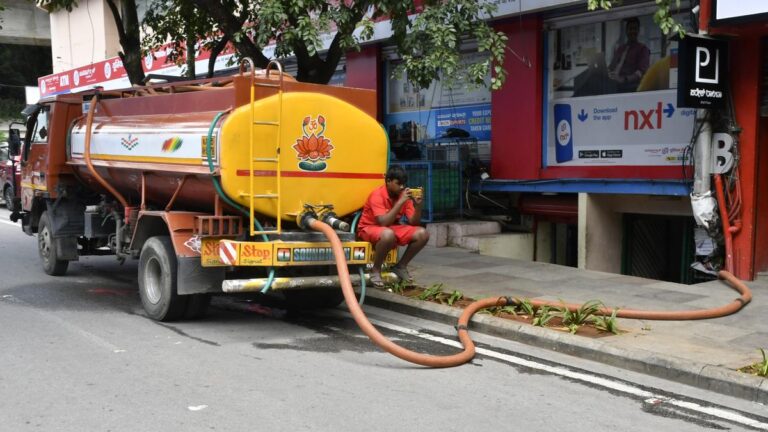
Delhi NCR has some of the hardest water in India. The calcium and magnesium dissolved in your borewell or municipal supply doesn’t just pass through your home – it leaves a deposit on everything it touches. Every pipe, every appliance, every surface. And it’s been doing this quietly, every single day.
Run through this checklist before reading further.
Is Your Home Showing These Signs?
| In the last 6 months have you noticed any of these? | Tick if yes |
|---|---|
| White chalky deposits on your taps and bathroom fittings | ☐ |
| Scale buildup inside your electric kettle | ☐ |
| Geyser that takes longer to heat water than it used to | ☐ |
| Clothes coming out of the washing machine looking dull | ☐ |
| Soap or shampoo that doesn't lather properly | ☐ |
| Dry itchy skin after showering | ☐ |
If you ticked 3 or more – hard water is almost certainly the cause. Keep reading.
What’s Actually in Your Delhi NCR Water
Hard water is water that contains high levels of dissolved calcium and magnesium. These minerals enter the water supply as groundwater passes through limestone and chalk deposits in Delhi’s geological aquifer system.
Hardness is measured in mg/L of calcium carbonate (CaCO₃). The BIS acceptable limit for drinking water is 300 mg/L. Most Delhi NCR borewell areas exceed this significantly – some localities hit 600–900 mg/L.
This is not immediately dangerous to drink. But over months and years, the cumulative effect on your home and your appliances is substantial – and measurable in rupees.
What Is MTDS in Your RO Purifier? And Why Your Technician Might Not Tell You the Full Story!
What Hard Water Is Doing to Your Home – And What It Costs
Your Geyser
Scale – the chalky residue that hard water leaves behind – builds up inside your geyser’s heating element over time. At hardness levels above 600 mg/L, scale accumulation in a standard geyser can reduce heating efficiency by up to 30% within 12–18 months.
What this means practically: your 2kW geyser is effectively working at 1.4kW. At Delhi electricity rates of ₹8–9 per unit, that’s an extra ₹800–1,200 per year in electricity costs – just from scale.
Descaling a geyser costs ₹500–1,000 per service visit. Most plumbers recommend doing it annually in hard water areas. Some households in Burari and Najafgarh are doing it every 6 months.
Your Washing Machine
Hard water reduces the effectiveness of detergent – the calcium and magnesium ions bind to soap molecules before they can clean your clothes. The result: you use more detergent to get the same result, clothes come out looking dull and feeling stiff, and the drum and drum seals accumulate scale deposits over time.
A washing machine in a hard water area typically needs its drum cleaned and seals replaced 30–40% earlier than the manufacturer’s warranty assumes.
Your Pipes and Taps
Scale buildup inside pipes reduces water flow over time. In older homes in hard water localities like Dwarka, Uttam Nagar, and Janakpuri, reduced water pressure is often traced back to scale – not aging infrastructure. The white crust visible on your taps and shower heads is the external manifestation of the same process happening inside your pipes.
Your Electric Kettle
The fastest indicator of your water’s hardness level. In a soft water home, a kettle needs descaling every 3–6 months. In hard water areas above 400 mg/L hardness, every 4–6 weeks. If you’re descaling your kettle monthly, your water hardness is high.
Quick test: Fill your kettle, boil it, let it cool, and look inside. White flaky deposits on the element or base = hard water. The thicker the layer, the harder your water.
What Hard Water Is Doing to You
This is the secondary effect – real, but not the primary reason to act.
Calcium and magnesium ions in hard water react with soap and shampoo to form a residue that doesn’t rinse cleanly. This leaves a film on skin that can cause dryness and irritation, and on hair that weighs it down and reduces shine.
For most people in moderate hard water areas (300–400 mg/L), the effect is mild. For those in extreme hardness localities (600+ mg/L), it’s more pronounced. If your skin feels tight after a shower despite good moisturiser, and your hair feels dull despite quality products – your water is likely contributing.
But here’s the key point: the same water you’re bathing in is the water you’re drinking and cooking with. The hardness affecting your skin is the same hardness your body is processing daily through your drinking water and food.
🔍 Not sure how hard your water is? The ROI Engine will tell you – and match you to the right solution in 60 seconds.
→ Take the ROguru Quiz at roguru.in
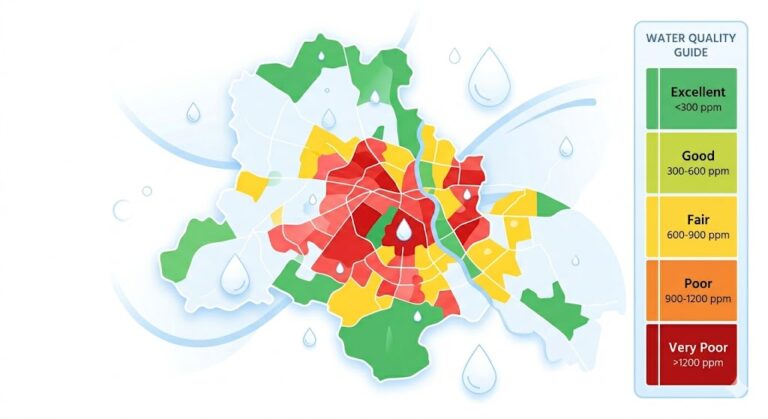
How Hard Is Your Water – Look Up Your Locality
Delhi NCR hardness varies significantly by locality. The same aquifer that gives Gurugram Sector 14 moderately hard water gives Burari and Janakpuri some of the hardest water in the region.
| Locality | Borewell TDS (ppm) | Hardness (mg/L CaCO₃) | Recommended TDS Band |
|---|---|---|---|
| Gurugram Sector 14–22 | 300–500 | 120–200 | 300–600 ppm band |
| Gurugram Sector 57–67 | 400–600 | 150–250 | 300–600 ppm band |
| Gurugram DLF Phase 1–5 | 350–550 | 130–220 | 300–600 ppm band |
| Noida Sector 62 | 350–550 | 140–230 | 300–600 ppm band |
| Noida Sector 137 | 800–1200 | 300–500 | 600–1200 ppm band |
| Noida Sector 150 | 700–1100 | 280–460 | 600–1200 ppm band |
| Noida Extension (Greater Noida West) | 900–1300 | 350–550 | 600–1200 ppm band |
| Greater Noida (main) | 600–950 | 220–380 | 600–1200 ppm band |
| Faridabad Sector 15–21 | 400–600 | 160–260 | 300–600 ppm band |
| Faridabad Sector 86–88 | 700–1000 | 280–460 | 600–1200 ppm band |
| Ballabhgarh | 1500–2000 | 600–900 | 1200–2000 ppm band |
| Rohini (Delhi) | 600–900 | 220–380 | 600–1200 ppm band |
| Dwarka (Delhi) | 700–1000 | 260–420 | 600–1200 ppm band |
| Burari (Delhi) | 1200–1600 | 480–750 | 1200–2000 ppm band |
| Najafgarh (Delhi) | 1400–1800 | 550–820 | 1200–2000 ppm band |
| Uttam Nagar (Delhi) | 800–1200 | 320–520 | 600–1200 ppm band |
| Shahdara (Delhi) | 900–1300 | 360–560 | 600–1200 ppm band |
| Ghaziabad Indirapuram | 700–1100 | 280–460 | 600–1200 ppm band |
| Ghaziabad Vaishali | 650–950 | 250–420 | 600–1200 ppm band |
| Ghaziabad Raj Nagar Extension | 800–1200 | 310–510 | 600–1200 ppm band |
Data source: Ion Exchange India / IJEAST 2024 – Delhi NCR borewell analysis.
Note: Municipal supply hardness is typically lower than borewell in the same locality – but still significant in most NCR areas.
Your Locality’s TDS Changes Everything – How to Pick the Right RO for Delhi NCR Borewell Water
What Actually Fixes Hard Water Problems in Delhi NCR
There are three common approaches to hard water. They’re not interchangeable – and understanding the difference will save you money.
Water Softener
A water softener uses ion exchange to replace calcium and magnesium with sodium. It genuinely softens water – effective for bathing, laundry, and protecting appliances. However it does not purify water for drinking. It also adds sodium to your water, which is not ideal for daily consumption.
Best use: whole-house protection for appliances in extreme hardness localities (500+ mg/L).
RO Purifier
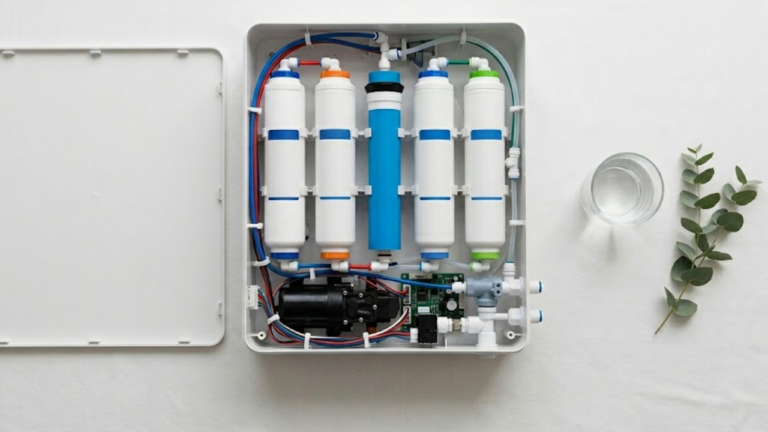
A properly spec’d RO membrane removes 90–95% of dissolved minerals including calcium and magnesium – effectively reducing hardness alongside TDS. For localities in the 300–600 mg/L hardness range, an RO purifier handles both the hardness and the purification need in one unit.
Important caveat: for extreme hardness localities (600+ mg/L), a standard RO membrane faces accelerated scaling and may need more frequent maintenance. A high-rejection membrane rated for your specific hardness level is essential.
Descaling Products
Kettle descalers, geyser descaling services, washing machine drum cleaners – these treat the symptom, not the cause. They’re a maintenance cost, not a solution. If you’re spending on these regularly, that money is better directed toward addressing the water itself.
The honest answer for most Delhi NCR households: an RO purifier at the right spec addresses both the drinking water safety concern and the hardness concern for your consumption water. For appliances, a whole-house pre-filter or softener is the complementary solution.
Your Water Has Been Working Against Your Home. Now You Know Why.
The white deposits on your tap aren’t a plumbing problem. The geyser that’s lost its heat isn’t a brand problem. The kettle you descale every month isn’t a product problem.
It’s all the same problem. Your water.
Delhi NCR’s hard water is one of the most consistent and overlooked causes of household expense in the region. The good news: once you know your locality’s hardness level, the right solution is straightforward.
An RO purifier matched to your water handles both the drinking water safety concern and reduces the hardness in your consumption water. For whole-house appliance protection in extreme hardness localities, combining it with a pre-filter or softener is the complete answer.
🔍 6 questions. Your locality. Your water source. Your budget. The ROI Engine matches you to the right RO – in 60 seconds.
→ Find the right RO for your hard water at roguru.in
If You’ve Identified Your Hard Water Problem – Here Are the Right ROs
This article helped you understand your water. If you’re now ready to act, here are the ROs built for Delhi NCR’s hard water – matched to your hardness band.
|
Hardness Level |
Localities |
Right Solution |
Recommended RO |
|
Moderate (150–300 mg/L) |
Gurugram Sector 14–22, Noida Sector 62, South Delhi |
Standard RO with mineraliser |
Aquaguard Ritz Pro, Livpure Allura Premia |
|
Hard (300–500 mg/L) |
Rohini, Dwarka, Indirapuram, Faridabad |
Higher-capacity RO – check membrane rating |
Urban Company Native M1, Pureit Eco Elite 2X |
|
Very Hard / Extreme (500+ mg/L) |
Burari, Janakpuri, Najafgarh, Ballabhgarh |
High-rejection RO – consider softener combination |
Pureit Eco Water Saver |
Product recommendations are independent – no brand pays for placement. Based on certified hardness ratings, membrane longevity, and service network in NCR.
300–600 ppm: Aquaguard Ritz Pro | Amazon Link
Strong fit for moderate-TDS Delhi NCR homes. In the ROguru database, Aquaguard Ritz Pro is listed for input TDS up to 1000 ppm, making it suitable for the 300–600 ppm range with room to spare. Its remineralization setup helps restore minerals after RO purification, and the Aquaguard service network is a practical advantage across many NCR areas.
300–600 ppm: Livpure Allura Premia | Amazon Link
A strong lower-to-mid TDS option for homes around the 300–500 ppm range. Livpure Allura Premia is listed for Delhi in the ROguru database, supports UV+UF along with RO, and includes remineralization plus anti-scalant treatment. It is a good choice for smaller households or buyers who want a balanced value option without overbuying for very high TDS.
600–1,200 ppm: Urban Company Native M1 | Amazon Link
A strong fit for Delhi NCR homes in the 600–1,200 ppm range. In the ROguru database, Native M1 is listed for Delhi and rated up to 2000 ppm input TDS. Its strongest advantage is the combination of 100% RO purification, post-remineralization, 8L storage, and the “no service for 2 years” proposition, which can reduce early ownership anxiety.
600–1,200 ppm: Pureit Eco Elite 2X | Amazon Link
A strong option for higher-mid TDS homes, especially where storage capacity and water saving matter. Pureit Eco Elite 2X is listed for Delhi and rated up to 2000 ppm in the ROguru database. It has 10L storage, remineralization, and 100% RO filtration with mineral addition, making it a practical choice for families in the 800–1,200 ppm range.
1,200–2,000 ppm: Pureit Eco Water Saver | Amazon Link
A strong high-TDS choice because the database explicitly notes 100% RO with no bypass and input TDS handling up to 2000 ppm. At 1,200+ ppm, no-bypass RO logic matters because you want the full water stream going through the RO membrane before minerals are added back. Its 10L storage and water-saving positioning also make sense for Delhi NCR homes dealing with hard borewell or tanker water.
1,200–2,000 ppm: AO Smith Z5 Pro | Amazon Link
A strong alternate for high-TDS homes, especially smaller households. AO Smith Z5 Pro is listed for Delhi and rated up to 2000 ppm in the ROguru database. It brings copper/mineral enhancement and strong TDS reduction, but its 5L storage means it is better suited to smaller families or homes with moderate daily drinking-water demand.
Data source: Ion Exchange India / IJEAST 2024 – Understanding Water Hardness in Delhi NCR