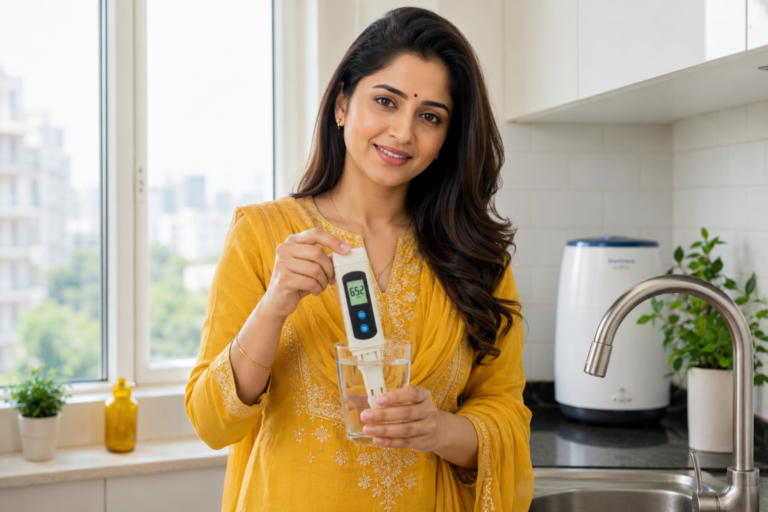
Full RO vs MTDS: Which One Actually Protects Your Family?
ROguru Team, Bangalore, May 28, 2026
In this Article:
- Why this question exists & why it’s confusing
- What Full RO actually does to your water
- What MTDS actually is (your technician probably explained it wrong)
- Full RO Vs MTDS : Head-to-head comparison
- Which one is right for your water source
- The Bangalore angle: borewell, tanker, and municipal water
- Our verdict
Why this question exists & why it’s confusing
- You are comparing two things: Full RO vs MTDS. You’ve been doing your research. You’ve read Amazon listings, asked friends, visited Reddit, and somewhere along the way you’ve seen two different products doing two different things — one labelled “Full RO”, another labelled “MTDS” or “Mineraliser” — and now you’re not sure which one you need. You don’t even understand what MTDS means.
- This confusion is not your fault. Most RO brands use these terms as marketing language, not as honest technical descriptions. Some brands call the exact same technology by different names across their own product range. A few use “MTDS” to mean something completely different from what it stands for.
- This article cuts through that. By the end, you’ll know exactly what Full RO and MTDS each do, when each one makes sense for your home, and which one is right for your specific water source in Bangalore
We have already covered what MTDS is in detail in our article – What is MTDS in Your RO Purifier and What your Technician Might Not Tell You. This article focuses on the comparison: Full RO Vs. MTDS – Head to Head.
What Full RO actually does to your water
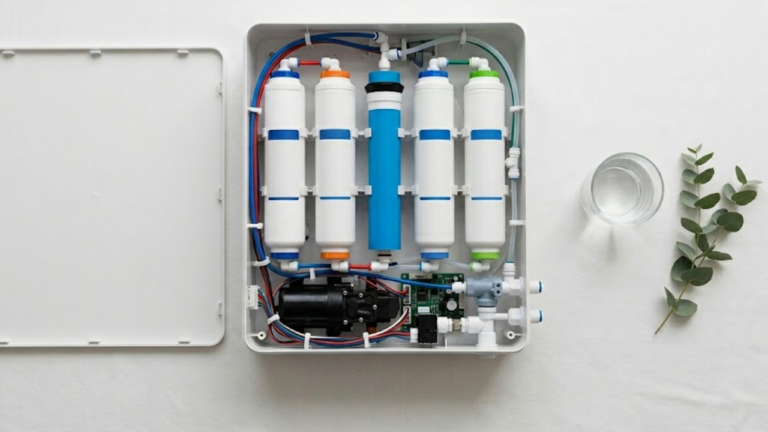
A Full RO purifier pushes your tap water through a semi-permeable membrane under pressure. The membrane has pores so small – roughly 0.0001 microns – that it blocks dissolved salts, heavy metals, bacteria, viruses, pesticides and most dissolved solids in your water. What comes out the other side is water with dramatically reduced TDS (Total Dissolved Solids).
The output TDS from a Full RO system is typically in the range of 10-50 ppm, regardless of what went in. If your borewell water enters at 800 ppm, it exits at around 20 ppm. If your municipal water enters at 300 ppm, it still exits at around 20 ppm. The membrane doesn’t discriminate – it removes almost everything.
What Full RO removes well
Full RO is excellent at removing dissolved salts (sodium, calcium, magnesium, sulphates, nitrates), heavy metals (lead, arsenic, fluoride, chromium), pesticides and agricultural runoff, and viruses and bacteria.
The tradeoff
Because Full RO strips almost everything, it also removes minerals that are actually beneficial. Minerals like calcium, magnesium and potassium that your body uses daily. The water that comes out is clean, but it’s also ‘minerally’ empty. At very low TDS levels (under 50 ppm), water can taste flat and over long periods, some health researchers have raised questions about consistently drinking demineralized water. The WHO and several other studies note that very low mineral content water may have adverse health effects with prolonged consumption.
What MTDS actually is
MTDS stands for Mineralizer + TDS Controller. It is a post-membrane addition – a secondary bypass pathway that takes a small amount of unfiltered (or lightly filtered) water and blends it back into the RO-purified output. The goal is to raise the final TDS of the water to a healthier and better-tasting range, typically 80–150 ppm.
The “Mineralizer” part may refer to a small cartridge containing minerals (calcium, magnesium) that are added back into the water after the RO stage. The ‘TDS Controller’ is a small manual dial that adjusts how much bypass water is blended in.
The critical point: In the MTDS approach, the bypass water has not passed through the RO membrane. It has typically passed through a pre-filter (sediment + activated carbon), but not the primary purification stage. What this means depends entirely on your water source.
Full RO Vs MTDS : Head-to-head comparison
| Factor | Full RO MTDS | MTDS |
| TDS reduction | Maximum — 90–95% reduction | Moderate — blends down to target range |
| Heavy metal removal | Excellent | Depends on bypass ratio – bypass water is unfiltered by membrane |
| Taste | Can taste flat at very low TDS Generally better — minerals improve taste | Generally better. Minerals improve taste |
| Mineral content | Near zero post-membrane | Some natural or added minerals retained |
| For borewell (high TDS) | Recommended — high contamination risk | Risky — bypass water may carry heavy metals |
| For municipal water | Works well, may over-purify | Good fit – lower contamination risk in bypass |
| For tanker water | Recommended – unknown source, high risk | Not advisable – source is uncertain |
| Ballpark 5-year maintenance cost (please confirm with vendor) | ₹12,000–18,000 (AMC + filters) | Similar – same membrane + additional mineralizer cartridge |
Which one is right for your water source?
Match Your Water Source To The Right Technology
🔴 Borewell water (TDS 400–1500 ppm): Full RO without question. Borewell water in cities like Bangalore carries high levels of dissolved salts, fluoride, and sometimes heavy metals. The MTDS bypass would reintroduce unfiltered borewell water back into your glass. This is not a risk worth taking.
🟡 Municipal / BWSSB / Kaveri water (TDS 80–250 ppm): MTDS or a remineralizer is a reasonable choice. Municipal / Kaveri water in Bangalore, while not perfect, is treated at source. The bypass water from a municipal supply is unlikely to carry heavy metals. A system with MTDS or a built-in mineralizer gives you better-tasting water without stripping it down to almost nothing.
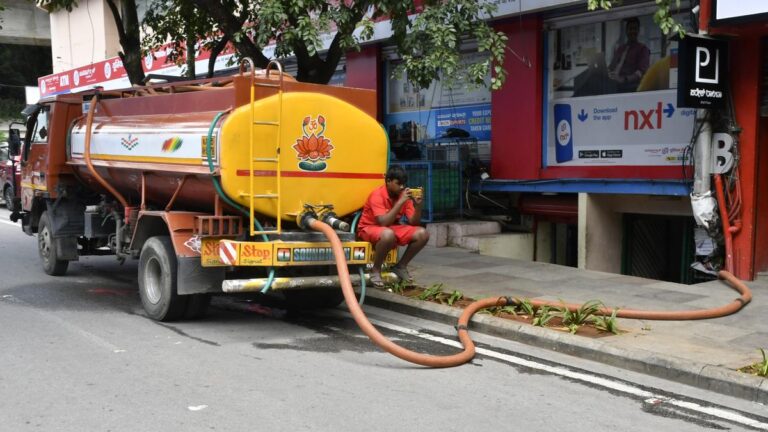
🔴 Tanker water: Full RO only. Tanker water in Bangalore is sourced from multiple disparate and frankly iffy locations – some private borewells, some lakes and some treated water. It is anybody’s guess. The tanker operators do not disclose this to customers or apartment society officials. The source is unknown and the quality varies trip to trip. DO NOT USE MTDS with tanker water. We covered this in detail in our article on the best RO for tanker water in Bangalore.
🟡 Mixed supply (some days borewell, some days municipal): In this case, it would be wise to treat it as borewell water. When your source changes day to day, you cannot know which water is going through the MTDS bypass at any given time. Full RO gives you consistent protection regardless of what’s coming in.
The Bangalore angle: what your water actually looks like
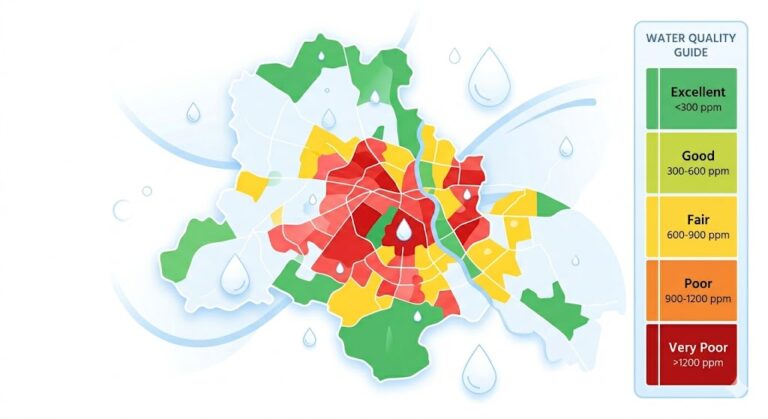
Bangalore’s water situation is genuinely complex. The core BWSSB supply – Kaveri water – has a TDS of around 80–150 ppm and is treated at source. If you are lucky enough to live in an area with direct BWSSB supply and a relatively new building, your water is among the better inputs in the city. An MTDS-based purifier actually makes sense here.
But most Bangalore households – particularly in newer residential areas, peripheral layouts and anything beyond the old BBMP limits – rely entirely or partly on borewell water. Borewell TDS in areas like Whitefield, Sarjapur Road, Belladur, Electronic City and Hennur runs anywhere from 400 to 1200 ppm. These areas have documented fluoride and hardness issues. Here, Full RO is not just optional – it’s the baseline.
Tanker-supplied buildings, which include a significant share of newer apartment complexes, face the additional problem of variable water quality. A purifier set up for municipal-quality water may underperform when the tanker brings something far worse one week. Full RO handles this.
Understanding the whole Full RO vs MTDS is critical for residents of Bangalore – depending on where you are.
A word on Remineralization vs MTDS
You may have also seen the term “Remineralization” on some product listings – especially on AO Smith, Urban Company, Kent and a few Havells models. This is different from MTDS. A remineralizer adds minerals (typically calcium and magnesium) to the output AFTER the RO stage – there is no bypass of unfiltered water. The purified water is mineralized, not diluted with raw water.
Remineralization is a cleaner solution than MTDS for households where water quality is moderate. It gives you the taste and health benefit of minerals without the contamination risk of the bypass. If you’re on municipal water and concerned about taste, a remineralizer is worth prioritizing over MTDS.
The Clear, Short, Answer.
Full RO if you’re on borewell or tanker water. MTDS or Remineralizer if you’re on a reliable BWSSB municipal supply.
When in doubt about your water source, choose Full RO – it’s the safer baseline. You can always add minerals back. You cannot easily remove what a weaker filter lets through.
Our verdict
Please understand that the Full RO vs MTDS debate is really a question about your water source not your preference. MTDS was designed for a world where the input water is reasonably clean – municipal-grade, treated, low in heavy metals. For that scenario, it works well and gives you better-tasting water.
But for the large portion of Bangalore on borewell supply, or any household taking tanker water, MTDS introduces a real risk. The bypass water has not gone through the membrane. Whatever is in your raw borewell water – fluoride, hardness, traces of heavy metals – a portion of it will end up in your glass.
The RO brands don’t tell you this clearly. The technicians who install the units often don’t either and frankly are not trained to explain. And the Amazon listings rarely spell out which technology their product uses. That’s the gap ROguru exists to close.
Not sure which type your current shortlist uses? Take our 60-second quiz – we’ll match you to the right technology based on your actual water source, budget, and household size.
Answer 3 quick questions. We'll tell you exactly which RO is right for your home - and why. Find my RO →
ROguru is India’s neutral RO water purifier advisor. No brand pays to be recommended. All recommendations are based on water source match, verified online performance data, and aggregate customer reviews on product and service quality. Links to Amazon are affiliate links. We earn a small commission at no extra cost to you. This helps keep ROguru free and independent